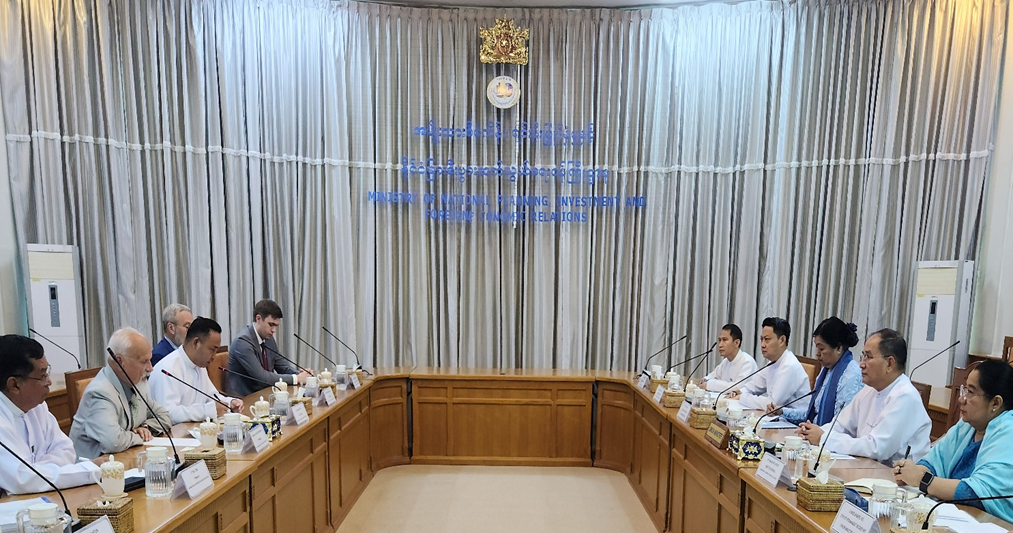
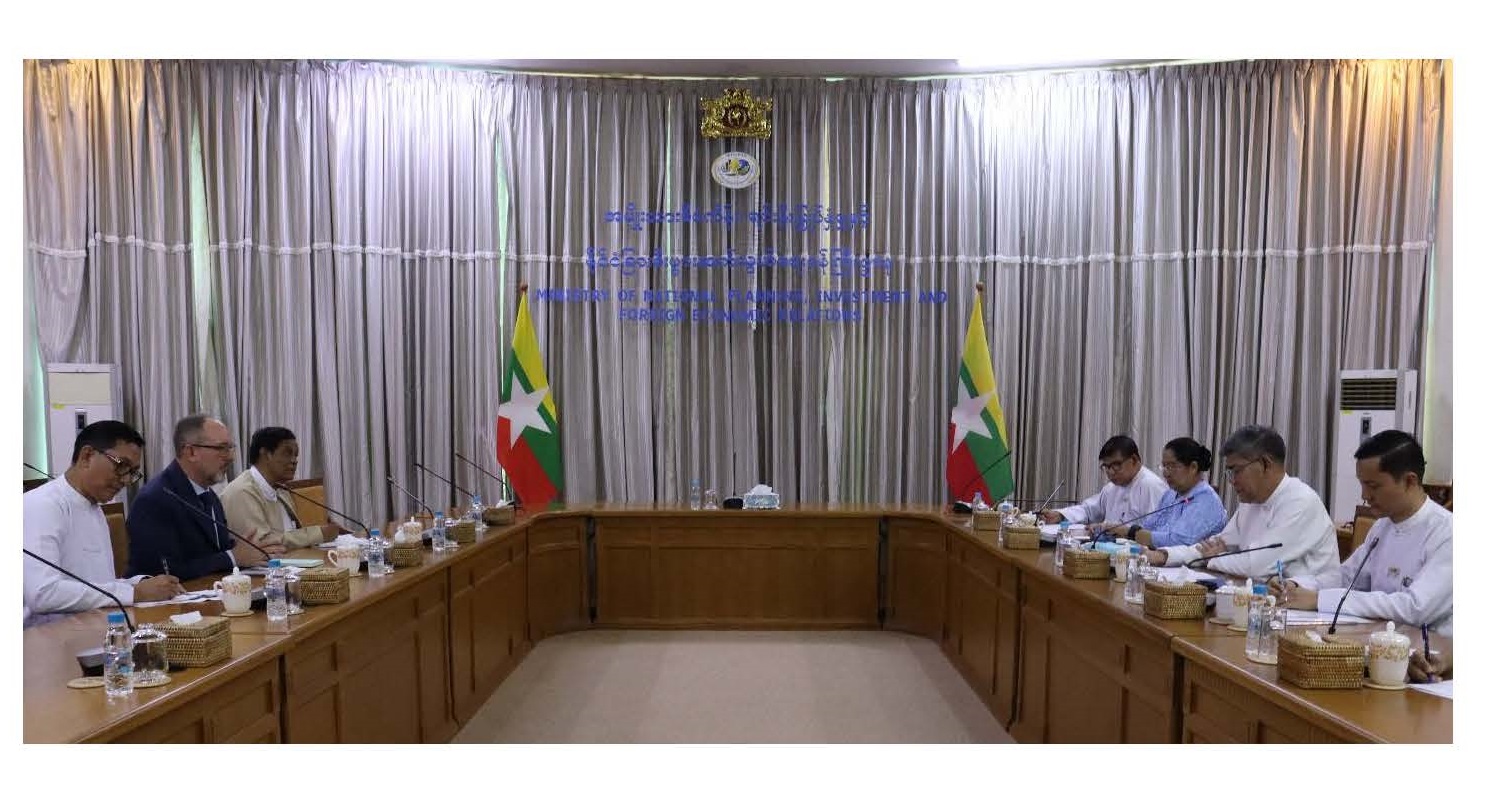
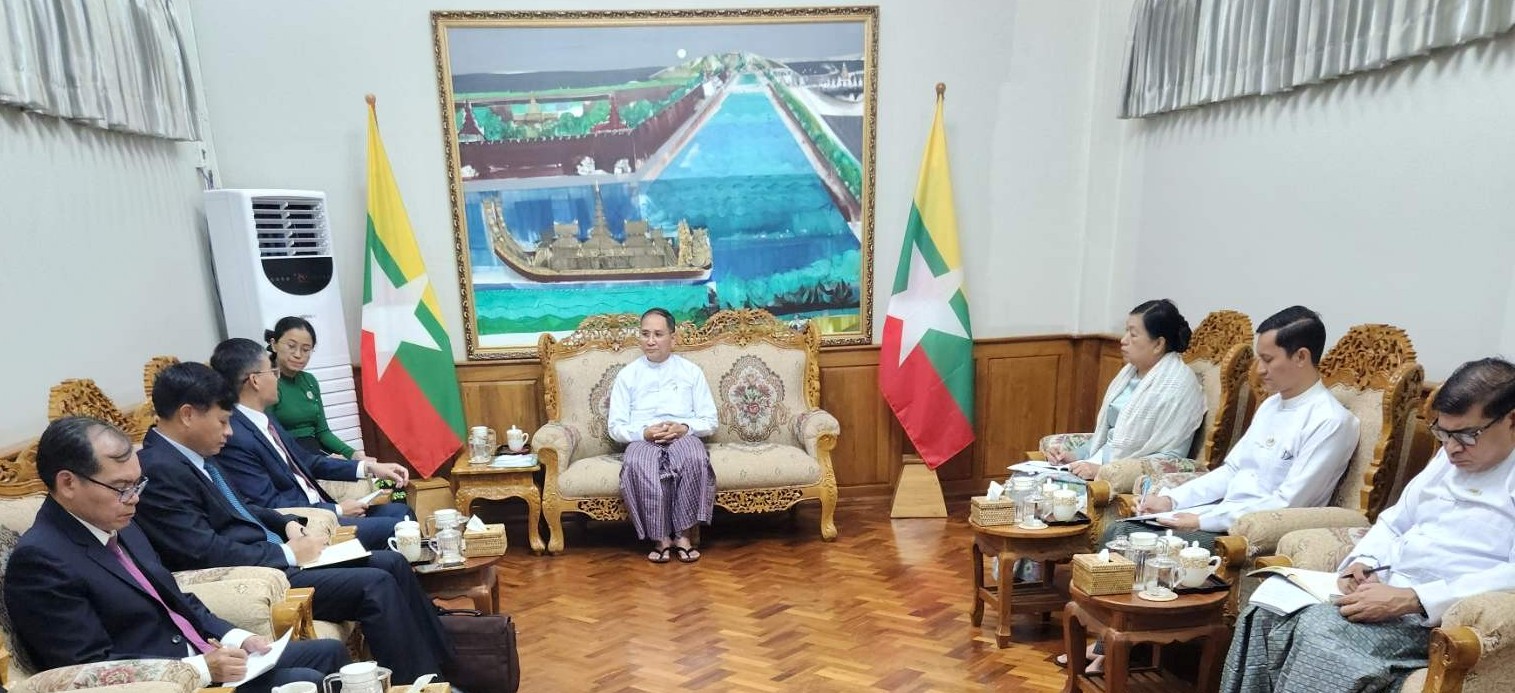
The Special Meeting of the ASEAN Economic Community Council (AECC) on the Economic Implications of the Situation in Middle-East Crisis was held today morning via videoconferencing chaired by H.E. Ma. Cristina A.Roque , Secretary of Trade and Industry of Philippines and H.E. U Aung Kyaw Hoe, Union Minister for National Planning, Investment and Foreign Economic Relations, along with Deputy Minister, Director Generals and relevant Officials attended the meeting.
During the discussion, Union Minister stated that the ongoing situation in the Middle East poses challenges that could affect not only ASEAN’s energy security but also its food systems, supply chains, and economic performance. He also expressed that the global energy market volatility impacts countries heavily reliant on energy imports, suggesting that investments in renewable energy such as solar, wind, and hydropower should be accelerated. Furthermore, he highlighted that the Middle East crisis could affect global food supply chains and price stability, as disruptions to trade routes and rising transportation costs put pressure on food-importing economies. Therefore, regional cooperation must be strengthened by increasing emergency food reserves, investing in climate-resilient agriculture, and maintaining transparent and predictable trade flows.
Union Minister suggested that ASEAN should deepen cooperation by mainstreaming economic security issues into the ongoing initiatives under the ASEAN Economic Community Strategic Plan (2026-2030). He also recommended to increasing engagement with ASEAN’s external partners and international organizations in order to mobilize resources for energy transition, technological development, information exchange, and crisis response.
At the meeting, the AECC Ministers together with the ASEAN Secretariat, Asian Development Bank (ADB), Economic Research Institute for ASEAN (ERIA) and East Asia and ASEAN Business Advisory Council (BAC) discussed openly and constructively on regional economic performance and future outlooks, the potential economic implications of the situation in the Middle East and its escalating impacts on global energy markets, supply chains, food security, and transport and logistics networks. Furthermore, they deliberated on assistance for the region's people and businesses, including Micro, Small, and Medium Enterprises (MSMEs) which is the backbone of ASEAN economies and identified the way forward to address and mitigate the effects of the crisis on the region. The meeting announced the Joint Statement of the ASEAN Economic Community Council on the Economic Implications of the Situation in the Middle East.